11th November 1918 marked the end of fighting on the Western Front. But remembrance means something much more.
Every November, we pause. We wear poppies, gather at memorials and observe two minutes of silence. Across Britiain, communities come together to remember those who lost thier lives in war.
What exactly are we remembering?
Ask someone what happened on 11 November 1918 and they will probably tell you that the First World War ended. Ask them why we commemorate Remembrance Day and they may give much the same answer. Yet there is an important distinction between Armistice and Remembrance. One marks a particular moment in history. The other asks us to reflect on the human consequences of conflict, across generations. Understanding that difference matters.
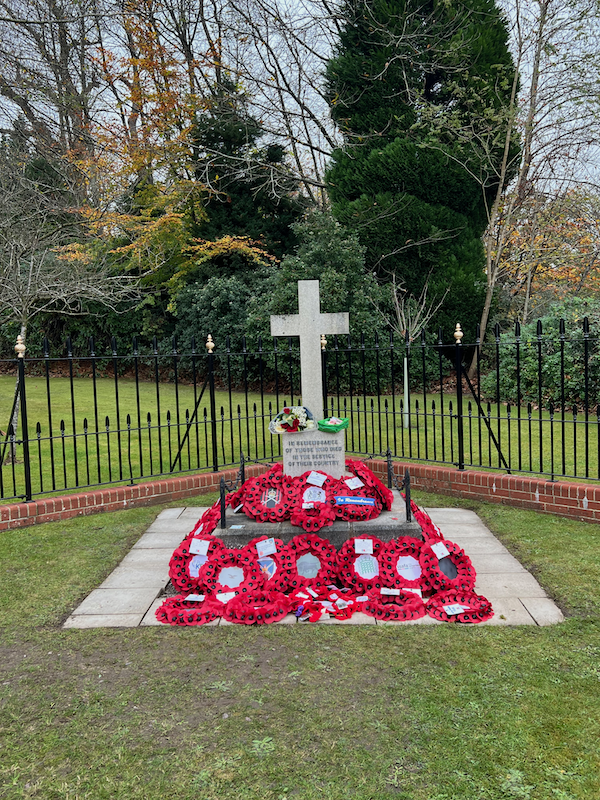
Commemorative Wreaths laid during a Remembrance Service at the Royal Garrison Church Aldershot
Armistice - The Day the Guns Fell silent
At 11 o'clock on the morning of 11 November 1918, the guns fell silent along the Western Front. After more than four years of devastating warfare, an armistice between Germany and the Allied powers brought the fighting there to an end. The agreement had been signed earlier that morning, shortly after 5am, in a railway carriage in the Forest of Compiègne, France. It was to take effect six hours later.
Imagine those final hours. Soldiers who had survived years of trench warfare knew that the fighting would soon stop. Yet, even as the clock approached eleven, men were still being killed and wounded. For those who survived, the silence must have been extraordinary. But an armistice is not a peace treaty. It is an agreement to suspend hostilities. The formal peace settlement with Germany would come the following year, with the Treaty of Versailles in June 1919.
Nor did the Armistice immediately end all conflict or suffering. Across Europe and beyond, political upheaval, violence, displacement and the consequences of war continued.
11 November 1918 was the end of the fighting on the Western Front, not the end of war itself.
From Armistice to Remembrance
The first anniversary of the Armistice, in 1919, was marked by a two-minute silence at the request of King George V. It was an opportunity for a nation still grieving to stop and remember. The scale of that grief is difficult to comprehend. Almost every community had been touched by the war. Families had lost sons, fathers, husbands and brothers. Many of those who returned carried physical or psychological wounds that would remain with them for the rest of their lives.
Memorials appeared in towns and villages across the country. They became places where communities could remember those who had not returned. Originally, Armistice Day was closely associated with remembering the dead of the First World War. But history did not stop in 1918.
The Second World War brought further sacrifice, followed by conflicts in Korea, the Falklands, Iraq, Afghanistan and many other places where British and Commonwealth personnel have served.
The focus of remembrance consequently broadened. In Britain, Remembrance Sunday became the principal occasion for national commemoration, held on the second Sunday in November. Today, we remember those who have died in service across conflicts, as well as recognising the suffering, sacrifice and lasting consequences experienced by so many others.
Armistice marks a moment. Remembrance embraces generations.
The Names behind the numbers
One of the challenges of military history is that we often describe war through dates, campaigns, battles and casualty figures. But every name on a memorial represents a person. Someone who had a home, a family, friends, ambitions and a life beyond their military service. Look at almost any village war memorial and you will find names that were once familiar to the community. They belonged to people who walked the same roads, attended the same schools, worked in local businesses and lived in houses that may still be standing today.
This is where history becomes personal. As a volunteer speaker with the Commonwealth War Graves Commission and an accredited battlefield guide, I have often been struck by the power of an individual story. A headstone in a military cemetery may tell us relatively little: a name, a regiment, a date of death and an age. Yet behind those few details lies a life and a story waiting to be discovered. And those stories can tell us as much about the human cost of conflict as any account of a famous battle.
Remembering is not simply about knowing how someone died. It is also about understanding who they were and the lives they might have lived.Call to action
Remembrance is not a Celebration of War
This is perhaps the most important distinction of all. Remembrance is not about glorifying warfare or celebrating military victory. Nor should it be confused with suggesting that every war was inevitable, every decision correct or every sacrifice justified. History demands that we ask difficult questions.
Why did wars begin? What choices did political and military leaders make? Could events have unfolded differently? What were the consequences for ordinary people?
These are questions worth asking, particularly when we consider the leadership, strategy and decisions that shaped events. But questioning the decisions that led to war does not diminish the service or sacrifice of those who were called upon to fight. Indeed, it may be one of the most meaningful ways of honouring them.
We can respect those who served while examining the decisions that placed them in danger. We can acknowledge courage without celebrating conflict. And we can remember loss without losing sight of the importance of peace.
Why Remembrance Still Matters
More than a century has passed since the Armistice of 1918. There are no surviving veterans of the First World War, and the generation that experienced the Second World War is rapidly disappearing from living memory.
For many younger people, these events can seem distant, belonging to a world very different from their own.But the consequences of war remain very real. Families continue to live with the loss of loved ones. Veterans carry the effects of their service. Communities still experience the consequences of conflict, long after the fighting has stopped. And beyond Britain's own experience, war continues to shape the lives of millions of people around the world.
Remembrance, therefore, is not simply an exercise in looking backwards. It is an opportunity to consider the cost of conflict, the responsibilities of those who make decisions and the value of peace. It also places a responsibility upon us to preserve the stories of those who experienced war, particularly as personal memories pass into history.
So, What Happened?
On 11 November 1918, an armistice brought the fighting on the Western Front to an end. It was a moment of enormous historical significance, bringing relief to millions who had endured four years of warfare.
But Armistice Day commemorates an event. Remembrance asks us to consider its meaning — and the meaning of the conflicts that followed.
When we stand in silence, we are not simply marking the end of a war fought more than a century ago. We are remembering people. Their service, their sacrifice, their families, their stories — and the human cost of decisions made in times of conflict.
Perhaps, above all, we are reminding ourselves why peace should never be taken for granted.
Lest we forget.
People, Places and Stories – History Where It Happened
At So, What Happened?, history is about more than dates and battles. Through talks, guided walks and historical research, I explore the people, places and decisions behind the events that have shaped our world.
If your history society, community group or organisation would like to explore these stories further, discover my programme of illustrated historical talks.